
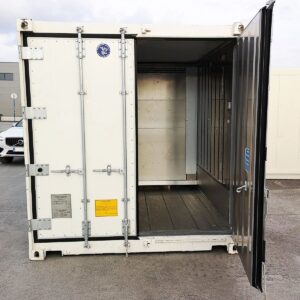
Shipping containers have become one of the most iconic and essential elements of global trade and logistics, revolutionizing the way goods are transported across the world. These large, standardized metal boxes are used to carry everything from raw materials to finished products, facilitating international trade and enabling economies to function efficiently on a global scale. While their primary function is to enable the secure transportation of goods by sea, rail, and road, Conex Depot Shipping containers have evolved to serve a wide variety of purposes beyond their original design, playing an integral role in many industries and sectors.
The introduction of shipping containers in the mid-20th century changed the face of global commerce. Before their invention, goods were manually loaded and unloaded, a labor-intensive and time-consuming process. The standardization of container sizes allowed for quicker, more efficient handling and the use of cranes and forklifts, significantly reducing shipping costs and time. This innovation helped increase global trade by reducing the friction involved in transportation and enabling goods to be moved more safely and predictably.
Shipping containers come in various sizes, with the most common being the 20-foot and 40-foot containers. These sizes have become standardized, allowing for interoperability across different modes of transportation. This consistency has also led to the creation of container ports around the world, which are specifically designed to handle these large boxes. The efficiency of containerized shipping has also contributed to the rise of container ships, which can carry thousands of these boxes at once, significantly increasing shipping capacity and lowering the cost per unit of transportation.
Aside from their primary role in global trade, shipping containers have found an array of secondary uses in various industries. One notable example is their adaptation for use in construction and architecture. Over the past few decades, there has been a surge in the popularity of shipping container homes, office buildings, and retail spaces. These structures are valued for their low cost, modularity, and ease of assembly, as well as their ability to be repurposed and recycled. Shipping containers can be easily stacked and arranged in different configurations, allowing for creative designs and functional spaces. In urban areas, where space is at a premium, converted shipping containers are increasingly used to create affordable housing and small businesses, providing an innovative solution to rising construction costs.
In addition to their use in construction, shipping containers are also widely utilized in the agricultural and food sectors. They are often repurposed as refrigerated units, allowing for the transport of perishable goods over long distances. The ability to maintain a controlled environment inside a shipping container ensures that food products, such as fruits, vegetables, dairy, and meat, remain fresh and safe for consumption during transit. Furthermore, modified shipping containers are used in hydroponic farming systems, where crops can be grown in a controlled environment without soil, offering a sustainable solution for food production in urban areas.
Another interesting application of shipping containers is in the field of disaster relief. These containers can be easily converted into temporary shelters, medical units, and storage facilities in the aftermath of natural disasters, providing immediate assistance to those affected. Their durability, portability, and ability to be quickly transported make them an ideal choice for use in crisis situations.
While shipping containers were initially designed for practical purposes related to transportation, their versatility has led to an explosion of creative uses that extend far beyond their original intent. From housing solutions to agricultural innovations and disaster relief, these metal boxes have become indispensable tools in solving modern-day challenges. The continued evolution of shipping container applications is a testament to their enduring relevance in a rapidly changing world, proving that innovation often comes in the most unexpected forms.