
In today’s digital world, the need to convert images into editable content is growing fast. A JPG to Text tool is an online solution that extracts written content from image files and turns it into editable text. Whether you are a student, teacher, business owner, or researcher, understanding how JPG to Text works can save you time and effort.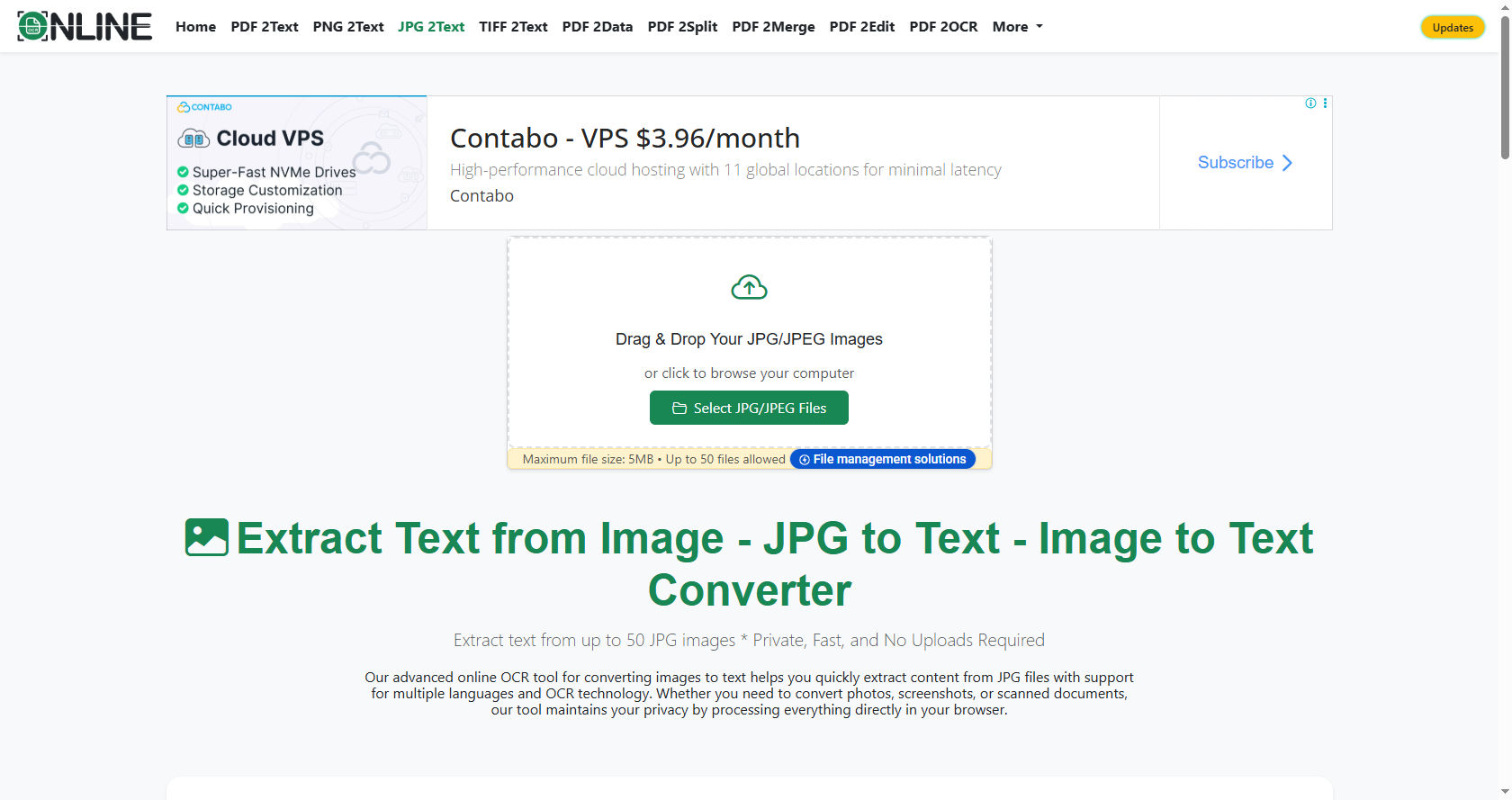
A JPG to Text online tool uses advanced technology called Optical Character Recognition (OCR) to scan and recognize characters in an image.
It reads the letters inside a JPG file and converts them into digital text that you can copy, edit, and share. Instead of typing everything manually, JPG to Text software does the work automatically.
This comprehensive guide will explain everything you need to know about JPG to Text tools, including how they work, their benefits, features, uses, and how to choose the right one.
Understanding the Basics of JPG to Text
JPG is a popular image format used to store pictures. Many scanned documents, screenshots, notes, and photos of printed pages are saved as JPG files. However, text inside an image cannot be edited directly.
This is where JPG to Text conversion becomes important.
A JPG to Text tool analyzes the image pixel by pixel. It detects shapes that look like letters and converts them into machine-readable text. The output can then be copied into Word documents, emails, or other applications.
The main goal of JPG to Text technology is to make information more accessible and editable.
How Does JPG to Text Technology Work?
To understand JPG to Text conversion, it is helpful to know about OCR.
Optical Character Recognition (OCR)
OCR is the technology behind JPG to Text tools. It works in several steps:
-
Image Upload
The user uploads a JPG file to the JPG to Text platform. -
Image Processing
The system enhances the image. It adjusts brightness, contrast, and sharpness to make characters clearer. -
Character Detection
The software identifies patterns that match letters and numbers. -
Text Conversion
The detected characters are converted into digital text format. -
Output Generation
The final text is displayed for editing, copying, or downloading.
Modern JPG to Text systems use artificial intelligence and machine learning to improve accuracy.
Why Do People Use JPG to Text Tools?
There are many reasons why JPG to Text tools are popular.
Saves Time
Typing long documents manually takes hours. JPG to Text can complete the task in seconds.
Reduces Errors
Manual typing can lead to spelling mistakes. JPG to Text tools reduce human error.
Improves Productivity
Students and professionals can focus on more important tasks instead of retyping content.
Easy to Use
Most JPG to Text tools are simple. You upload the image and click convert.
Accessible Anywhere
Since many JPG to Text platforms are online, they work on computers, tablets, and smartphones.
Key Features of a Good JPG to Text Online Tool
Not all JPG to Text tools are the same. A good tool should include:
High Accuracy
The main purpose of JPG to Text is accurate text extraction. A reliable tool should recognize different fonts and sizes.
Multi-Language Support
Advanced JPG to Text platforms can recognize multiple languages.
Fast Processing Speed
The best JPG to Text tools provide quick results without long waiting times.
Secure Upload
A trustworthy JPG to Text website protects user data and deletes files after processing.
Editable Output
The extracted text from JPG to Text should be easy to copy or download in formats like TXT or DOC.
Common Uses of JPG to Text
JPG to Text tools are useful in many fields.
Education
Students use JPG to Text to convert notes, book pages, and assignments into editable text.
Teachers use JPG to Text to digitize printed materials.
Business
Companies use JPG to Text to extract data from invoices, receipts, and reports.
Research
Researchers rely on JPG to Text to convert scanned documents into searchable content.
Personal Use
Individuals use JPG to Text for converting handwritten notes, letters, and screenshots.
Benefits of Using JPG to Text Online
There are several advantages of using an online JPG to Text tool instead of offline software.
No Installation Required
Online JPG to Text tools work in browsers. No downloads are needed.
Cross-Device Compatibility
You can access JPG to Text from any device with internet access.
Automatic Updates
Online JPG to Text platforms update automatically with improved features.
Cost-Effective
Many JPG to Text tools are free or affordable.
Step-by-Step Guide to Using JPG to Text
Using JPG to Text is simple. Follow these steps:
-
Open a trusted JPG to Text website.
-
Upload your JPG image file.
-
Click the convert or extract button.
-
Wait a few seconds while the JPG to Text tool processes the image.
-
Copy or download the converted text.
Most JPG to Text platforms follow this easy process.
Accuracy Factors in JPG to Text Conversion
The quality of JPG to Text output depends on several factors.
Image Quality
Clear images produce better JPG to Text results. Blurry images reduce accuracy.
Font Style
Simple fonts are easier for JPG to Text tools to recognize.
Lighting
Proper lighting improves the clarity of text in the image.
Handwriting
Some advanced JPG to Text tools can recognize handwriting, but printed text gives better results.
Limitations of JPG to Text Tools
Although JPG to Text is powerful, it has some limitations.
Complex Layouts
Images with tables, columns, or graphics may confuse JPG to Text systems.
Low-Resolution Images
Poor-quality images reduce JPG to Text accuracy.
Special Characters
Some symbols may not convert perfectly in JPG to Text output.
Despite these limitations, technology continues to improve.
JPG to Text vs Manual Typing
Many people wonder whether JPG to Text is better than manual typing.
Manual typing gives full control, but it takes time. JPG to Text saves time and increases efficiency.
For large documents, JPG to Text is the better option.
Security and Privacy in JPG to Text Tools
Security is important when uploading documents online.
A reliable JPG to Text tool should:
-
Use encrypted connections
-
Delete uploaded files after processing
-
Protect user information
Before using any JPG to Text service, check its privacy policy.
Free vs Paid JPG to Text Tools
There are both free and paid JPG to Text options available.
Free JPG to Text Tools
Free tools are good for basic needs. However, they may have:
-
File size limits
-
Limited daily conversions
-
Ads
Paid JPG to Text Tools
Paid JPG to Text platforms often offer:
-
Higher accuracy
-
Faster processing
-
Larger file support
-
Better security
Choose the JPG to Text option based on your needs.
How to Choose the Best JPG to Text Tool
When selecting a JPG to Text tool, consider:
-
Accuracy level
-
Speed
-
Language support
-
Security features
-
User reviews
-
Cost
Testing different JPG to Text platforms can help you find the best one.
Tips for Getting Better Results from JPG to Text
To improve JPG to Text output quality, follow these tips:
Use Clear Images
Ensure the text in your JPG file is sharp and readable.
Avoid Shadows
Good lighting helps JPG to Text tools detect characters correctly.
Crop Unnecessary Areas
Remove extra background to help JPG to Text focus on the text.
Use High Resolution
High-resolution images improve JPG to Text accuracy.
Future of JPG to Text Technology
The future of JPG to Text looks promising.
Artificial intelligence continues to improve. Future JPG to Text tools may:
-
Recognize complex handwriting
-
Understand document layout
-
Translate extracted text automatically
-
Provide near-perfect accuracy
As technology grows, JPG to Text tools will become even more powerful.
Who Can Benefit Most from JPG to Text?
Almost anyone can benefit from JPG to Text.
Students
Students can convert textbook pages and handwritten notes using JPG to Text.
Teachers
Teachers can digitize printed materials with JPG to Text.
Office Workers
Employees can extract data from printed forms using JPG to Text.
Writers
Writers can convert research images into editable content with JPG to Text.
Real-Life Example of JPG to Text Use
Imagine a student who takes a photo of class notes. Instead of typing everything later, they upload the image to a JPG to Text tool. Within seconds, the content becomes editable text.
This shows how JPG to Text makes daily tasks easier.
Advantages of Using JPG to Text for Academic Work
Academic work often involves printed resources. JPG to Text helps students:
-
Create digital notes
-
Edit scanned materials
-
Save time during assignments
-
Improve organization
JPG to Text is especially useful during exam preparation.
How JPG to Text Supports Digital Transformation
Businesses and schools are moving toward digital systems. JPG to Text plays an important role in this transformation.
By converting paper documents into editable files, JPG to Text reduces paper use and improves data management.
Organizations use JPG to Text to store information digitally and make it searchable.
Common Mistakes to Avoid When Using JPG to Text
To get the best results from JPG to Text, avoid these mistakes:
-
Uploading blurry images
-
Ignoring spelling errors after conversion
-
Using unreliable websites
-
Not checking privacy policies
Even though JPG to Text is advanced, reviewing the final output is important.
Conclusion
In conclusion, a JPG to Text online tool is a powerful solution for converting image-based text into editable digital content. It uses OCR technology to recognize characters and transform them into usable text.
JPG to Text saves time, improves productivity, and reduces manual work. It is helpful for students, professionals, businesses, and researchers. With just a few clicks, JPG to Text can turn printed pages, notes, and scanned documents into editable files.
Although JPG to Text tools may have minor limitations, continuous technological improvements are making them more accurate and reliable. By choosing a secure and high-quality JPG to Text platform, users can enjoy fast and efficient text extraction.
As the world becomes more digital, JPG to Text will continue to play an important role in document management and information sharing. Learning how to use JPG to Text effectively can improve efficiency, organization, and productivity in both academic and professional life.
JPG to Text is not just a convenience. It is a practical and essential digital tool for modern communication and data processing.